- October 29, 2026
- Elizabeth Ryan
Most people can tell you exactly which sofa they want. Ask about lighting, though, and the answer is more vague, and usually whatever the builder installed.
That’s understandable, since light bulbs rarely feel as exciting as fabric samples. Lighting still shapes how every other choice in your home comes across, so here are the questions we hear most often and how we answer them.
What are the different types of lighting in a room?
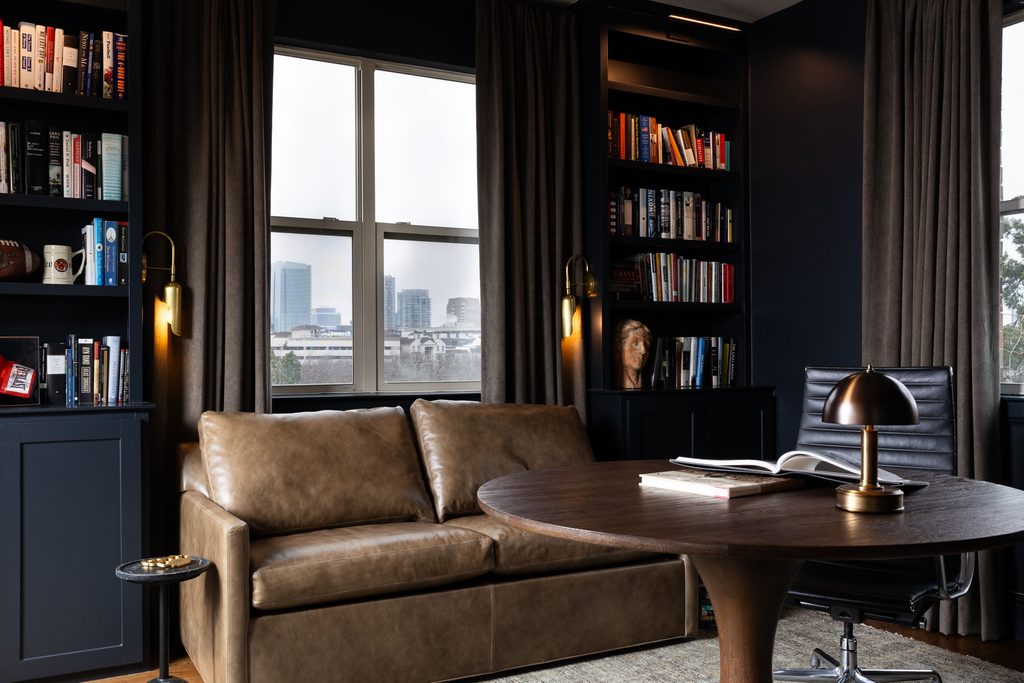
A well-lit room uses three kinds of light, overhead, task, and ambient. Each one handles a different job.
Overhead lighting is the chandelier or recessed lights you switch on when you walk in. Every room needs it, though on its own it can leave a space feeling flat and a little harsh. (Ask anyone who has tried to put on mascara under a single recessed light.)
Task lighting is what you work by. Think pendants over the kitchen island, or a reading lamp beside the chair someone actually reads in. We place these based on how your family uses the room, long before anyone falls for a lampshade.
Ambient lighting is the gentler layer of table lamps, sconces, picture lights, and anything on a dimmer. It sits closer to eye level and keeps the room inviting once the overheads go off.
What is layered lighting?
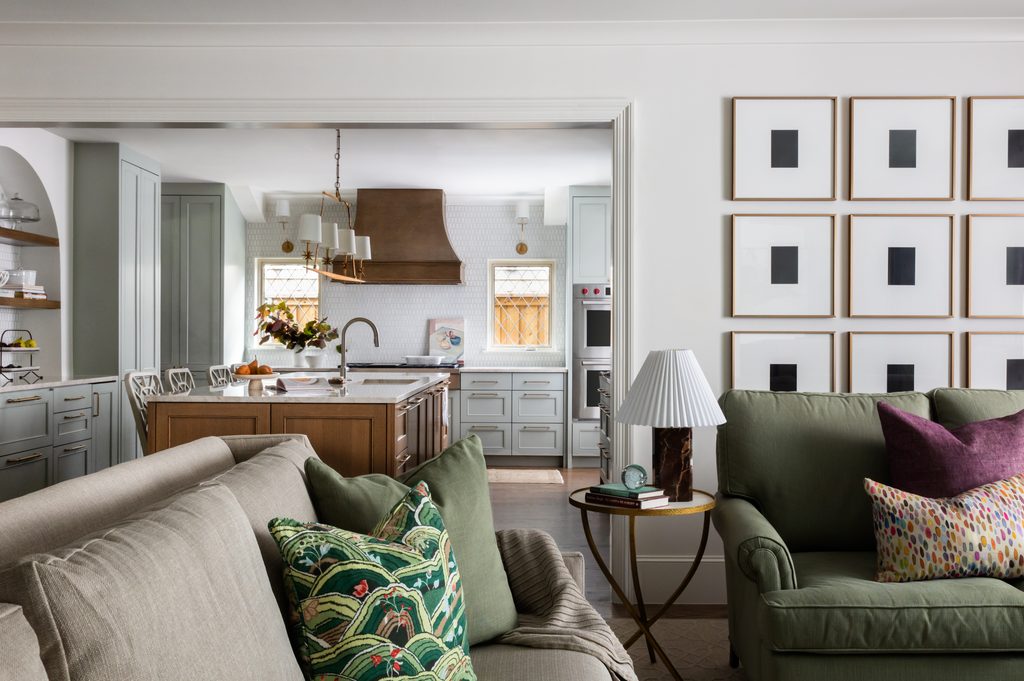
Layered lighting means using all three types together, at different heights, so no single light has to do all the work. You can turn on what you need for cooking or reading, dim the rest when you’re winding down, and the room feels comfortable at any hour.
Why does lighting matter so much in interior design?
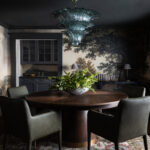
Lighting determines how everything else in a room looks, from the paint on the walls to the fabric on your sofa. A fixture can absolutely be the star, and a sculptural chandelier over the dining table deserves the same attention we’d give a piece of art.
The larger job is less visible. The velvet you chose and the paint color you spent three weeks deciding on both depend on light to look the way you pictured them. Under one overhead fixture, a deep plum wall can look muddy. Add a couple of lamps and a sconce, and that same wall becomes rich and glowing.
What’s the most common lighting mistake?
The mistake we see most often is counting on recessed lights to do everything. Those lights point straight down, so they cast shadows under people’s eyes and can make a Dallas living room feel more like an office.
A few lamps and sconces at eye level solve both problems. Everyone in the room looks more like themselves, and you can save the overheads for cleaning day.
Do all the light fixtures in a room need to match?
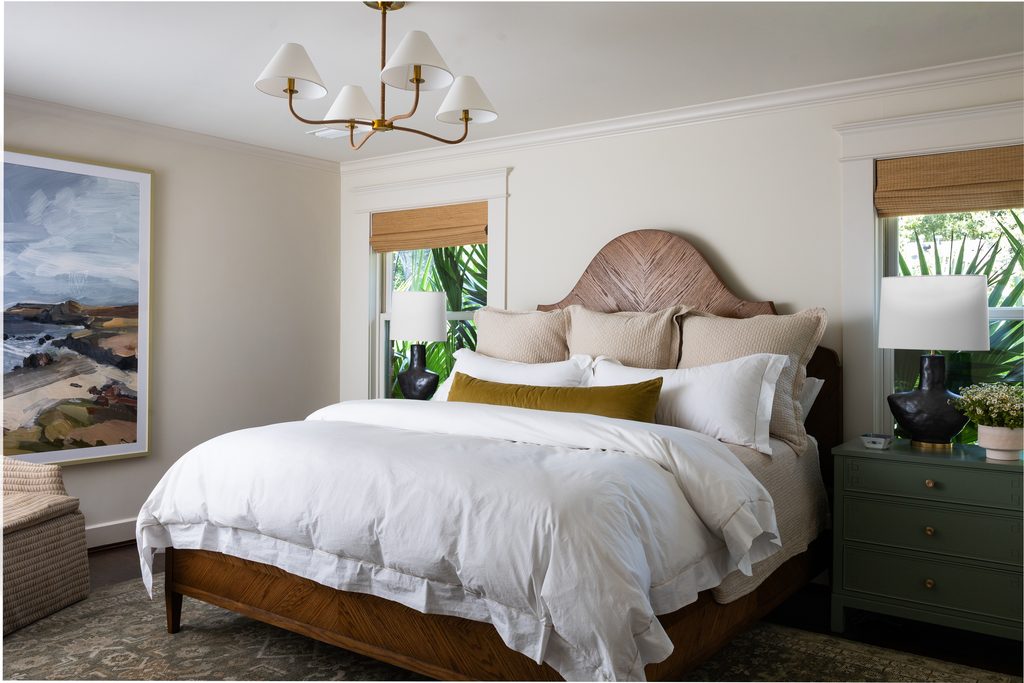
No, and rooms usually look better when they don’t. We look for fixtures that share a finish or a general shape, so they feel cohesive without looking like they all came out of the same box.
How can window treatments help you make the most of natural light?
The right window treatments let you keep the daylight you want and filter out the glare you don’t. Natural light is the first layer in any room, and in Dallas there’s usually plenty of it.
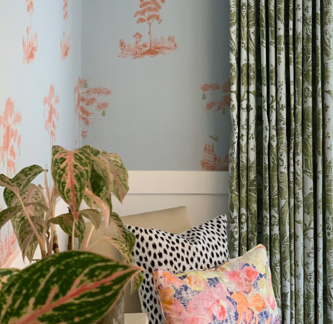
When drapery hangs just below the ceiling and the rod extends past the window frame, the panels rest against the wall instead of covering the glass, which makes the window look bigger and lets more light in. For rooms that take strong afternoon sun, sheers or light-filtering shades cut the glare without making the space feel dark, and they help protect your rugs and upholstery from fading.
How high should a chandelier hang with tall ceilings?
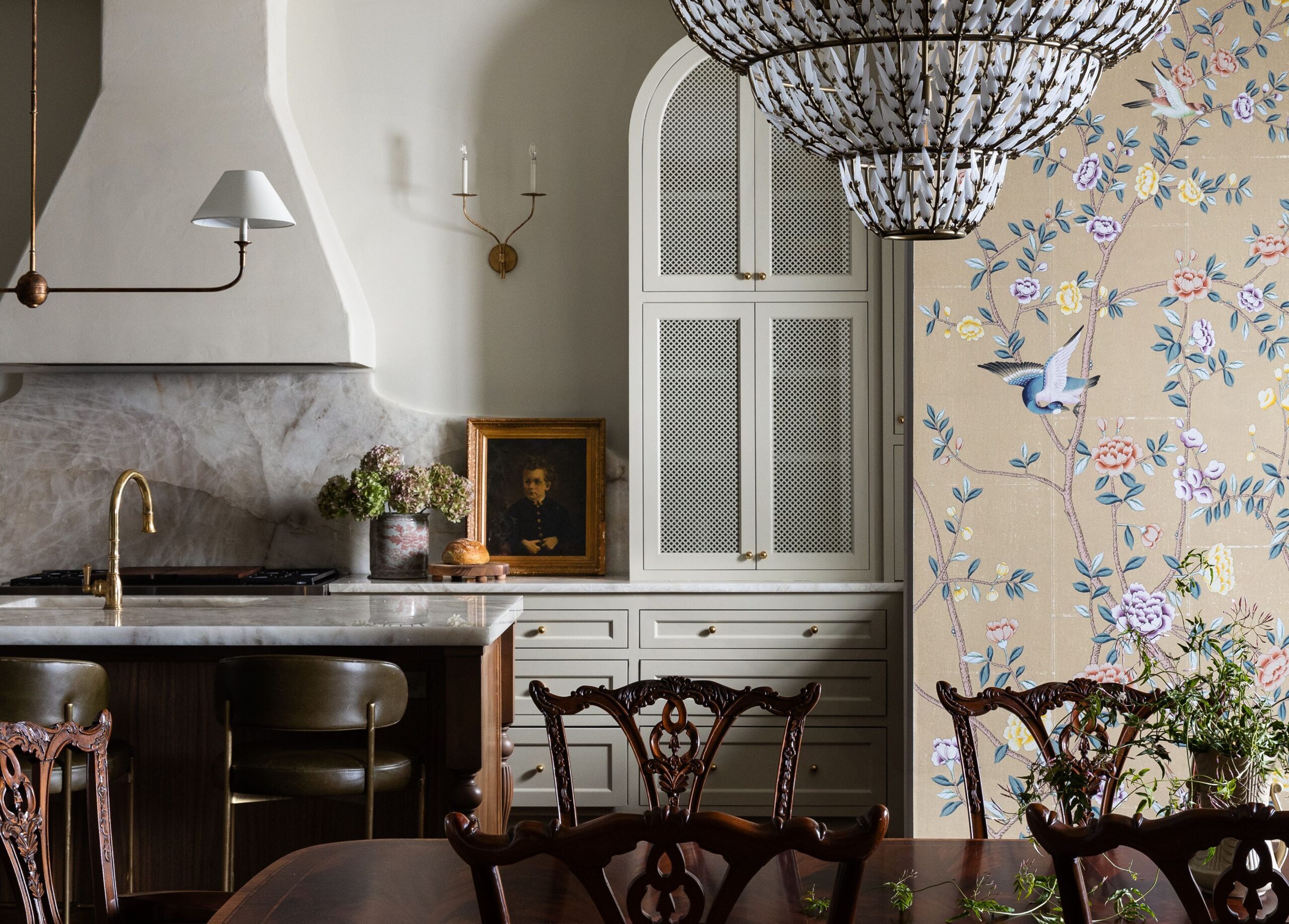
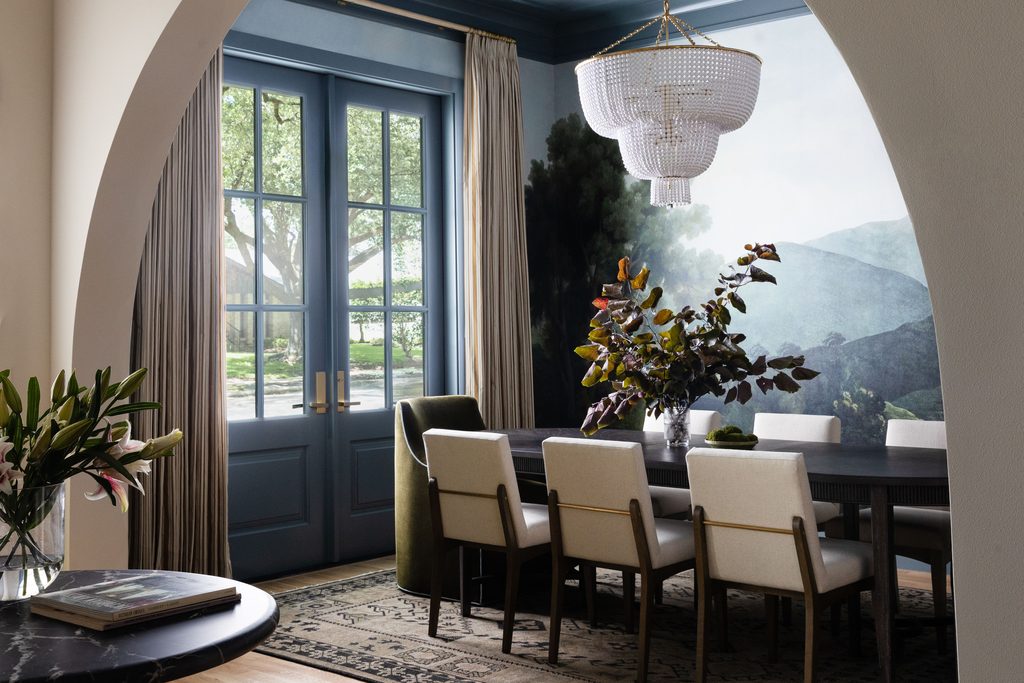
Over a dining table, the bottom of the chandelier typically sits 30 to 36 inches above the tabletop, no matter how tall the ceiling is. In a two-story entry, give yourself at least seven feet of clearance underneath.
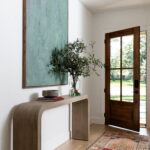
If there’s a window above the front door, centering the chandelier in it lets you see the fixture from the street, which is especially pretty at night.
How do you light an open floor plan?
Light each area as if it were its own room. Pendants over the island and a chandelier over the table set the kitchen and dining areas apart, and lamps around the sofa do the same for the living space.
Putting each area on its own dimmer means the kitchen can stay bright for cooking and cleanup while the living room stays cozy.
What color temperature bulbs should I use at home?
For most living spaces, warm white bulbs around 2700K are the safest choice. They give off a golden glow close to incandescent bulbs most of us grew up with. Whatever you pick, use the same bulb color throughout a room so one lamp doesn’t look yellow while the one across from it looks blue.
When should you plan lighting in a renovation or new build?
Plan it early, alongside the furniture layout, because the two depend on each other. A sofa floating in the middle of a room needs a floor outlet if it’s going to have a lamp beside it, and that decision has to happen before the floors go in and the drywall goes up.
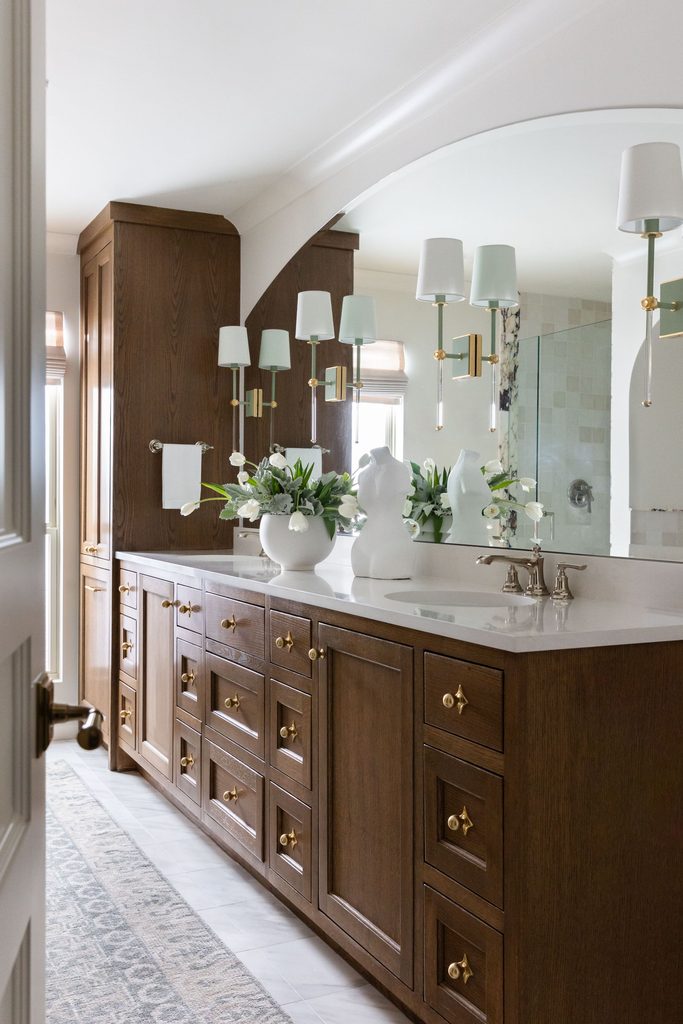
Good lighting is easy to miss on paper and impossible to miss once you’re living with it, which is why we plan it as part of the larger design. As a full-service Dallas interior design studio, we take on the whole home, from the floor plan and finishes to the furniture, art, window treatments, and lighting. We work alongside your builder or contractor and manage everything through installation and styling, so each room feels complete when you walk back in.
If you’re ready to start, schedule a consultation and tell us how you want your home to feel, at noon and long after dark.