- December 22, 2025
- Elizabeth Ryan
A guide for high-achieving professionals who are ready to bring the same intentionality to their downtime as they do to their workdays.
Ever come home from an amazing, but full work day ready to relax, but still feel like you’re in performance mode? Or find yourself with a couple weekend hours and relaxing doesn’t feel like an option. Your home should support how you live and work, but also needs to have moments for respite.
As a person who loves her job, a job that happens to be centered around Home, I truly understand the importance of designing a home that invites moments of retreat. If you are a busy person, brilliant at what you do and need a home that helps you turn off – this article is for you. Keep reading as we explore how thoughtful design can cue rest, reset your nervous system, and bring a little luxury to your daily unwind.
Thoughtful design helps to keep all spaces from feeling like a to do list.
There is an unintentional design bias toward productivity in our homes. Kitchen islands as makeshift offices, a living room for laundry folding.
This can leave us overstimulated in our own homes. And while it’s practical, it’s not particularly nurturing. Thoughtful design helps to keep all spaces from feeling like a to do list.
Intentional interior design creates space for stillness. For breathing. For beauty with no agenda. A thoughtfully placed chair in a quiet corner becomes a sanctuary. A well-lit hallway becomes a moment of calm rather than a pass-through. When your home is designed to support restoration — not just function — it subtly rewires your nervous system to exhale.
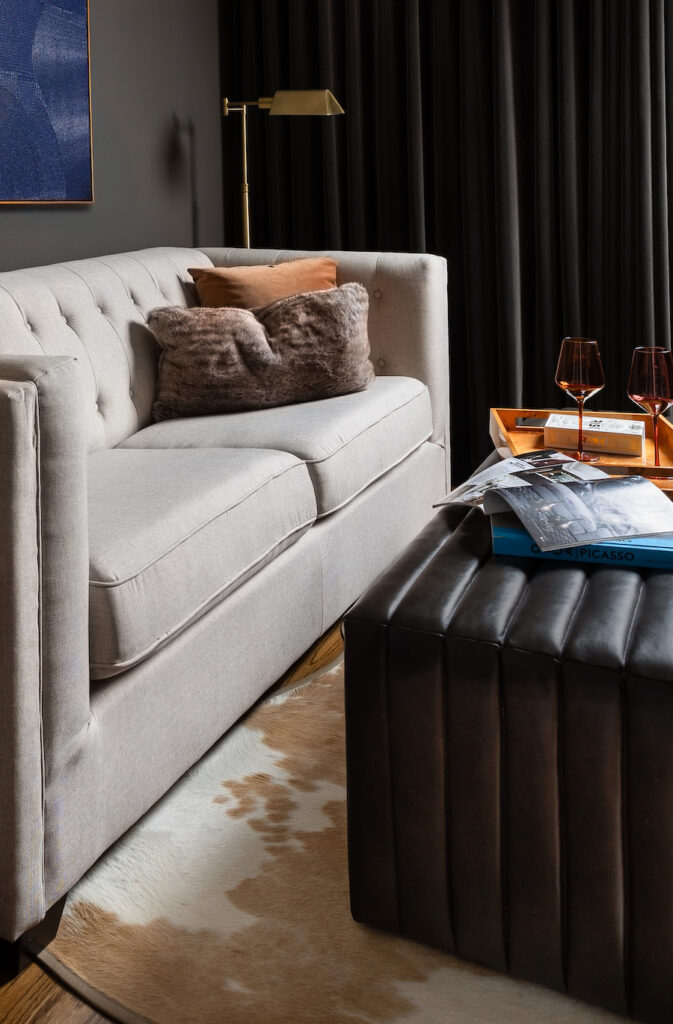
Intentional interior design creates space for stillness
Thoughtful Ways to Create a Home That Nurtures You
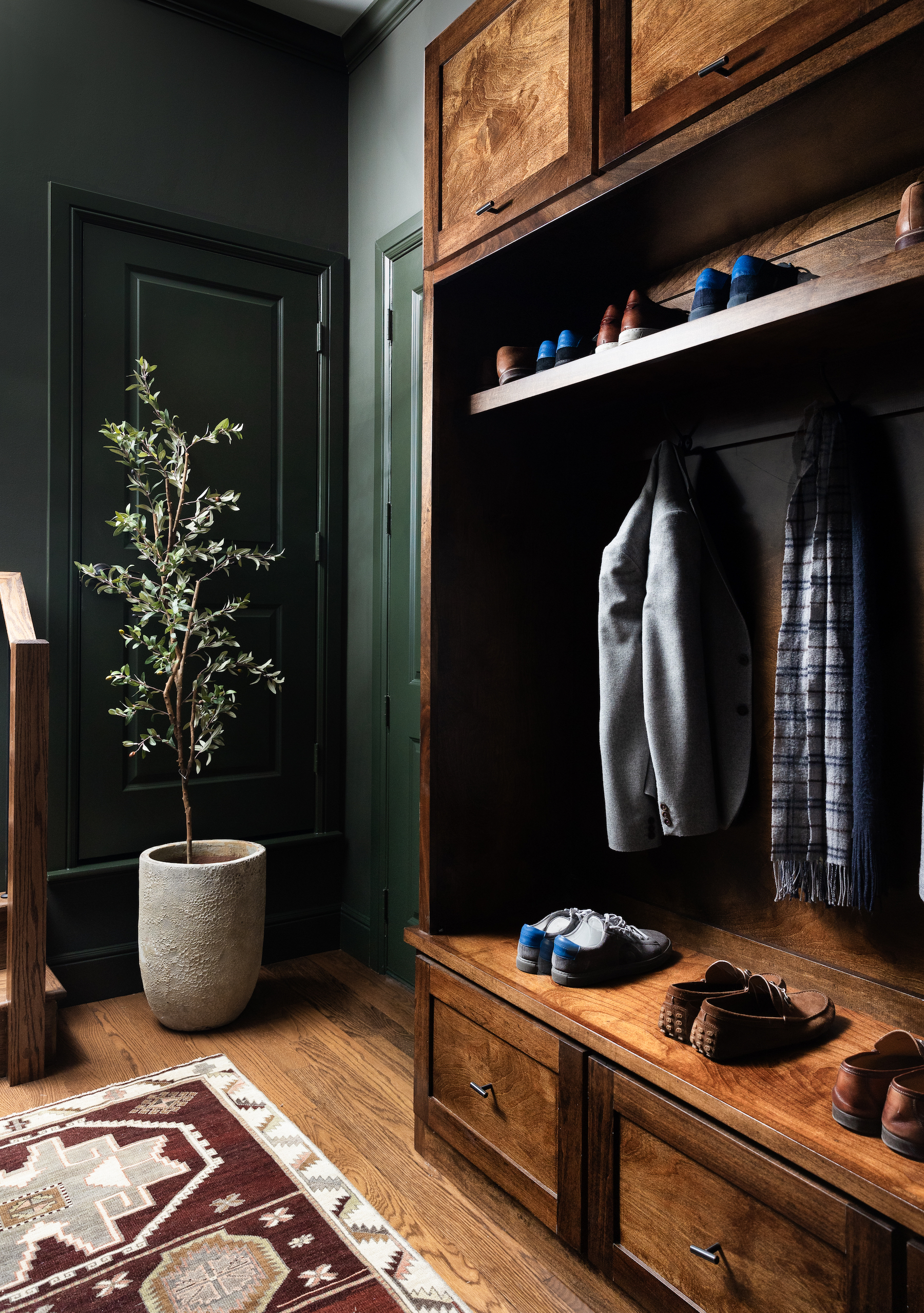
1. Design a “soft landing” space at the entry.
Think of it as the home’s hug as you come home. . Instead of a cluttered drop zone, create a serene welcome with soft lighting, sophisticated color and great storage for handbags and coats. If space allows, we love a colorful upholstered bench or a console with space for a vase or lamp.
2. Layered Lighting That Knows the Day is Over
Harsh overhead lighting does no one any favors and it certainly doesn’t scream chill. Layer your lighting — ambient, task, and accent . Choose dimmable switches wherever possible – we even dim kitchens to offset the many can lights typically needed for kitchen tasks.. Table lamps with fabric shades and sconces on dimmers can make even the busiest room feel like a retreat.
3. Curate visual “white space.”
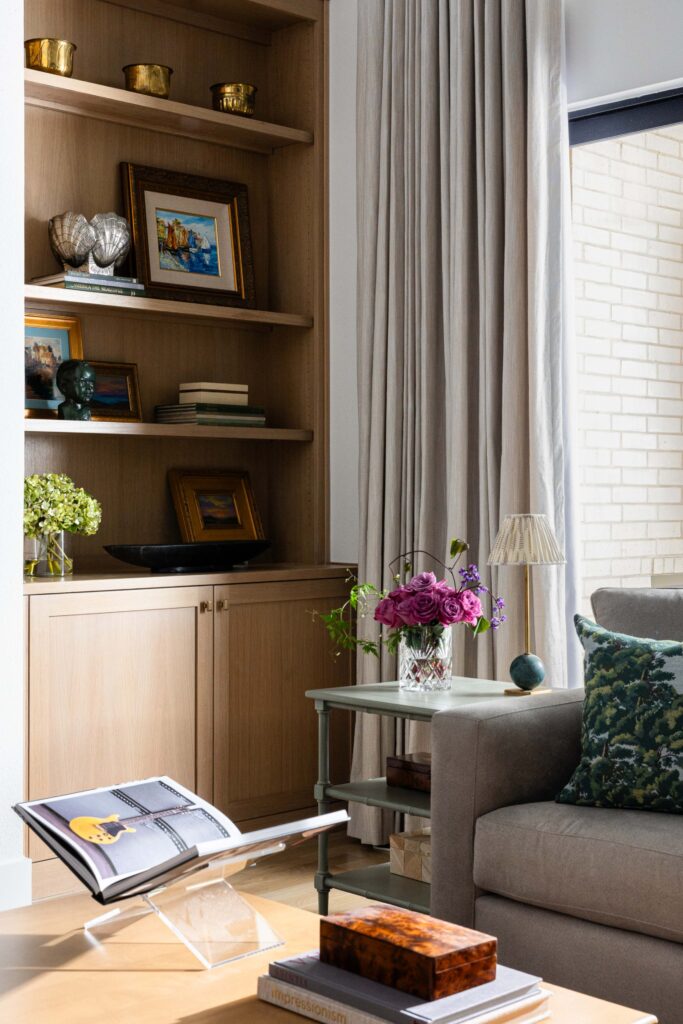
Not every surface needs a statement. In fact, leaving intentional empty space (on walls, shelves, or countertops) can give the eye and brain a break — and elevate the pieces you do display. Quiet corners are luxury.
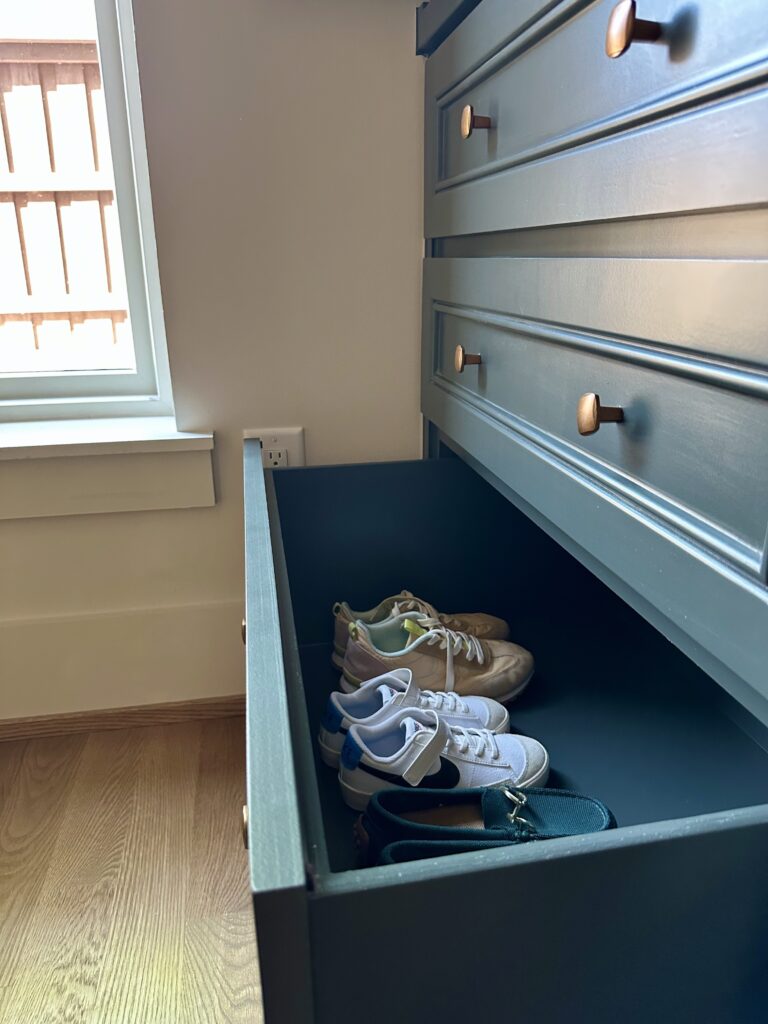
4. Plan and Protect specific zones.
A well planned utility room leads to less laundry in the bedroom. A dedicated reading chair with a side table at the perfect height for the glass of wine/cup of coffee. Investing in clear spatial boundaries — some zones devoted to work, others fiercely protected for rest — pays off in both function and peace of mind. It’s thoughtful design that respects your time and effort.
At the end of the day, home isn’t just where you go — it’s how you feel when you get there.

At the end of the day, home isn’t just where you go — it’s how you feel when you get there. A well-designed space should soften the edges of your day, not sharpen them. When your home is aligned with your emotional well-being, it stops being just a backdrop and starts becoming an active ally in your restoration. If your home doesn’t help you decompress, it may be time for a quiet revolution — one built not on bigger spaces or trendier pieces, but on deeper intention.